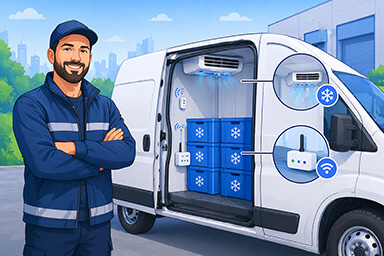
Every morning before sunrise, Perishable Market prepares for the day. Forklifts move between rows of chilled pallets — milk, yogurt, salads, berries — each fitted with a reusable real-time sensor. A gateway device installed in every refrigerated truck collects all sensor signals and streams them continuously to the Perishable Market control system. Because they own the entire chain — warehouse, trucks, and stores — both sensors and gateways never leave the company's ecosystem. They circulate endlessly: warehouse → truck → store → back again.
Packing & Dispatch
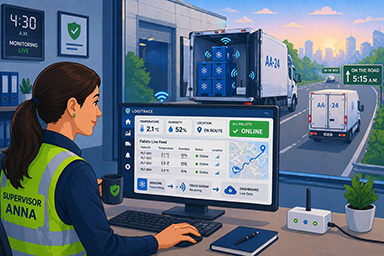
At 4:30 a.m., supervisor Anna watches each pallet come online as sensors begin transmitting temperature, humidity, and location — all routed through the truck's gateway to her dashboard. By 5:15 a.m., truck AA-24 is on the road.
On the Road
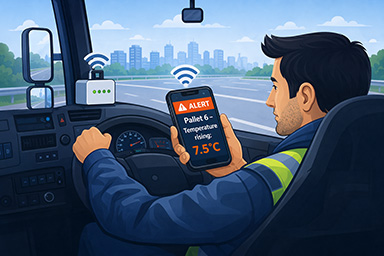
The gateway maintains a constant data link to Tomas's phone. Halfway to the city, it pushes an alert: Pallet 6 – Temperature rising: 7.5°C. Tomas pulls over, finds a shifted ventilation flap, and fixes it. The corrective action is completed. Without the sensor and gateway working together, that yogurt could have quietly warmed for an hour unnoticed.
Arrival & Return
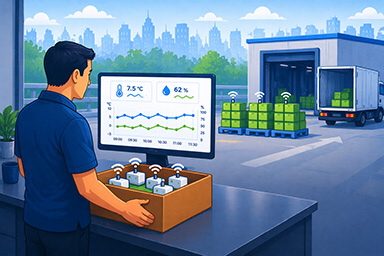
At Store 202, the receiving manager opens the Sensor App — delivery time, temperature history, and shock data all appear instantly. Once the pallets are unpacked, the sensors are placed into a return box and transported back with the same truck. Back at the distribution centre, each device is scanned, checked, updated, and returned to service. These are not disposable accessories — they are operational assets.
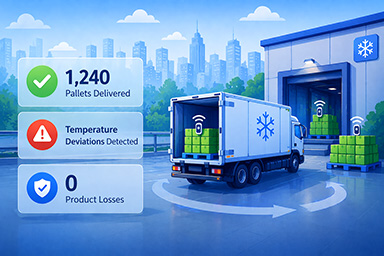
Result
By afternoon: 1,240 pallets delivered, one temperature deviation detected, zero product losses. Sensor data feeds long-term planning — optimising load patterns, predicting refrigeration wear, and reducing food waste. Every night, the sensors return home. Every morning, they go out again.