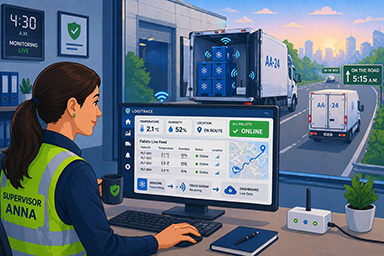
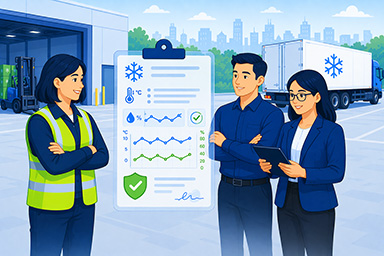
Riga's food scene runs on small producers — bakeries, cheese makers, organic farms, pasta kitchens — most of which are too small to operate their own cold-chain logistics. Delivery Service fills that gap with a driver-powered network.
The Setup
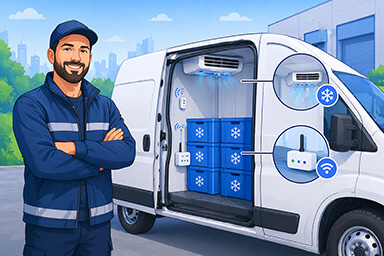
Driver Janis subscribes to the platform, equips his van with a gateway device, and picks up insulated smart cold boxes with embedded reusable sensors. He does not manage the sensors — he is the data carrier. Every temperature reading travels through his gateway and into the platform.
On the Road
That morning, producer Zaļais Siers loads cheese crates into Janis's cold boxes. For high-value wheels, logistics manager Laura adds a disposable sensor tag inside one crate. As Jānis drives toward Riga, the gateway quietly collects temperature readings, timestamps, and route data — uploading everything whenever the van connects to mobile data.
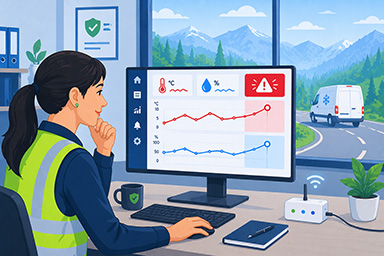
Mid-route, a temperature spike appears on the disposable sensor. Laura checks the dashboard; the cold-box sensor still reads 4.2°C. Sunlight briefly hit the lid. The temperature stabilises. A false alarm — but the visibility confirms the system works.
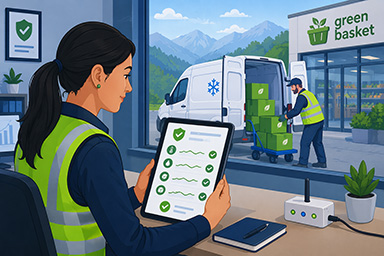
Arrival
At eco shop Green Basket, the owner opens the platform and sees the full temperature history from both sensors — everything within range. Janis removes the cold box and loads it back in for the next pickup.
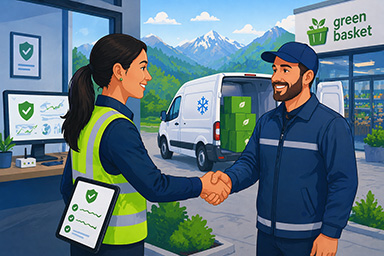
Result
By the end of the day, Janis has transported yogurt, bread, vegetables, and cheese from multiple producers — each using the platform in their own way. All data flows through the same van, the same gateway, the same driver. He doesn't just move food. He moves information — and that keeps the entire cold chain transparent and reliable, from farm to shelf.